
A treadmill belt slipping when you run can feel unsettling straight away. The belt may pause under your foot, drag slightly, move to one side, jerk during use or slow down as soon as weight is applied.
In a commercial gym, this is more than an annoying fault. A slipping treadmill belt can affect member safety, take equipment out of use during busy periods and create avoidable complaints on the gym floor. For home users, it can make the treadmill feel unreliable and unsafe to train on.
The cause is not always obvious from the outside. It could be a loose or worn belt, a lack of lubrication, alignment issues, roller wear, or a deeper mechanical fault. The key is knowing when to stop using the machine, what you can check safely and when to call us for professional support.
What Does A Slipping Treadmill Belt Feel Like?
A slipping treadmill belt does not always fail completely. In many cases, the treadmill still turns on and the belt still moves, which can make the problem easy to underestimate.
You may notice the belt hesitating for a split second under your foot. It might feel as though the treadmill is dragging, catching or slowing down when you increase speed. In some cases, the belt may move to one side or feel loose underfoot.
In a gym, members may describe the problem in different ways. They might say the treadmill “feels strange”, “keeps catching”, “slows down when running” or “doesn’t feel smooth”. Those comments should be taken seriously, especially if more than one person reports the same issue.
A clear description of the fault helps us understand what may be happening before we inspect the machine.
Why Does A Treadmill Belt Slip?
A treadmill belt can slip for several reasons. Some are simple to spot, while others need an engineer to inspect the machine properly.
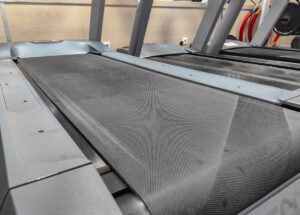
One common reason is incorrect belt tension. If the running belt is too loose, it may slip when someone walks or runs on it. This is often more noticeable at higher speeds or when more weight is applied.
Wear can also cause problems. Treadmill belts do not last forever, especially in commercial gyms where machines are used throughout the day. Over time, the belt can lose grip, feel uneven or place extra strain on other parts of the treadmill.
Lubrication can also play a part. Some treadmills need the right level of lubrication between the belt and deck. If the deck becomes dry, the belt can drag, heat can build up, and the machine may not run smoothly.
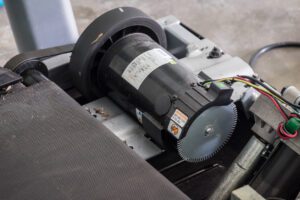
There may also be an issue with the drive belt, rollers or alignment. If the running belt moves to one side, rubs against the frame, or keeps drifting after use, the treadmill needs to be checked before the issue causes more wear.
In commercial gyms, heavy use can make minor faults appear sooner. A treadmill that feels fine during a quick test may start slipping once members use it repeatedly during peak times.
Is It Safe To Use A Treadmill If The Belt Is Slipping?
If the belt slips underfoot, jerks, slows suddenly, moves unevenly or feels unsafe, the treadmill should be taken out of use.
This is especially important in a commercial gym or leisure centre. A member running at speed could lose balance if the belt catches or slows without warning. Even if the machine still powers on, that does not mean it is safe to keep using.
The safest first step is to switch the treadmill off if it is safe to do so, place a clear “out of use” notice on the machine and make sure staff know not to let members use it. If the treadmill is in a busy area, this also stops people from trying it without realising there is a fault.
Taking the machine out of use quickly helps protect members, reduces complaints and shows that equipment issues are being handled properly.
What Can You Check Before Calling A Treadmill Engineer?
There are a few simple checks you can do without taking the treadmill apart.
Look at whether the belt has moved to one side. Check for any visible debris around the belt or rollers. Look for signs of fraying, cracking, rubbing or uneven wear. If the treadmill has a console, note any error codes shown on the screen.
You should also listen for unusual noises. Grinding, knocking, squeaking or rubbing sounds can all point to a fault that needs attention. If there is a burning smell, stop using the treadmill straight away and do not keep testing it.
What you should not do is remove covers, tamper with wiring, adjust internal parts or keep running the machine if it feels unsafe. That can worsen the fault and increase the safety risk.
If you manage a busy site and the same treadmill keeps slipping during member use, it may need a professional inspection rather than another quick staff check.
When Does A Slipping Treadmill Belt Need Professional Repair?
A slipping belt should be checked by an engineer if the problem persists, worsens during operation, or recurs after basic checks.
You should also arrange support if the belt slips under weight, moves to one side repeatedly, emits heat or smells hot, makes unusual noises, or feels unstable during use.
In many cases, the running belt is only one part of the issue. The fault may involve the deck, rollers, motor strain, drive belt or general wear. That is why guessing at the cause can lead to the wrong fix.
For gyms, it is usually better to act early. A treadmill that is out of use for several days can affect peak-time capacity, frustrate regular members and make the gym floor feel poorly maintained. Early inspection can help reduce downtime and prevent a small problem from becoming a larger repair.
Why Treadmill Belt Problems Matter More in Commercial Gyms
In a home setting, a slipping treadmill is frustrating. In a commercial gym, it can affect members, staff, and the facility’s overall perception.
Treadmills are often among the most used machines in a gym. If one is out of use at a busy time, members notice quickly. If the same machine keeps failing, it can lead to complaints and make people question how well the equipment is being looked after.
Staff also need to manage the problem. They may have to redirect members, explain why the machine is out of use and answer repeated questions if the repair is delayed.
Prompt repair or service helps keep the gym floor functioning properly. It also helps protect your reputation by showing members that faulty equipment is not being ignored.
How To Stop A Treadmill Belt Slipping Again
Once a slipping belt has been checked, it is worth considering how to reduce the risk of a recurrence.
Keep a simple record of treadmill faults, especially in commercial gyms. Note which machine had the issue, what happened, when it was reported and whether the fault has happened before. This helps identify repeat problems and high-use machines that may need closer attention.
Staff should be encouraged to report early warning signs, such as belt movement, unusual noise, heat, dragging or member comments about the treadmill feeling uneven.
Regular servicing can also help. During a service, an engineer can check belt condition, deck wear, lubrication, alignment and other signs of strain. This can help spot problems before the treadmill becomes unsafe or unusable.
For gym owners, the benefit is clear: fewer repeat faults, less downtime, fewer member complaints and a more reliable gym floor.
Need Help With A Slipping Treadmill Belt?
If your treadmill belt is slipping, slowing down, moving to one side or feeling unsafe, we can help inspect the machine and advise on the next step.
We work with treadmills in commercial gyms, leisure centres, fitness facilities and home gyms. Whether the problem is linked to belt tension, wear, alignment, deck condition or another fault, we can help you understand what is causing the issue and whether servicing or repair is needed.
When you contact us, it helps to include the treadmill make and model, a short description of the fault, any error codes, and photos or a short video, if useful. It is also helpful to tell us whether the treadmill is used commercially or at home.
We provide treadmill servicing for commercial and domestic treadmills, offering support across England, including Manchester, Birmingham, Nottingham, Leicester, and Coventry.
If the issue affects more than one machine, we can also help with wider commercial gym equipment repair, including support for commercial gym equipment repair in Liverpool, Manchester, Nottingham, and Sheffield.
A slipping treadmill belt should not be ignored, especially if members are using the machine every day. Contact us to arrange treadmill servicing or gym equipment repair and get your treadmill checked safely.